Keeping Pets in Homes
It takes a village to keep families together
When shelters, animal control, and the community work together, we can significantly reduce the number of animals who end up on the streets. We discussed how to prevent strays and lost pet resources with Lindsay McCall, East Bay SPCA’s Vice President of Operations.
How does East Bay SPCA work to prevent strays?
Our mission goes far beyond caring for homeless animals — we’re focused on preventing them from becoming homeless in the first place. We do that through community-based programs that make a real difference: offering affordable spay and neuter services to reduce unwanted litters, providing microchips and ID tags to help lost pets find their way home, and supporting pet owners with resources to keep their animals during tough times.
What can pet owners do to keep pets from getting lost?
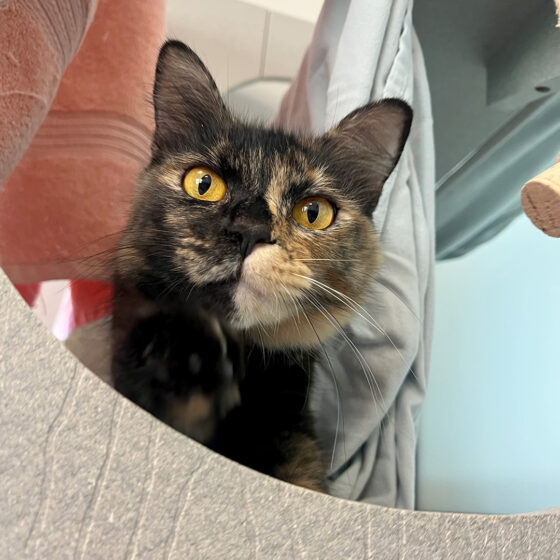
Pet owners play a huge role in preventing animals from becoming strays. The most important steps are simple but powerful: make sure pets are spayed or neutered, microchipped and have a visible ID tag — and keep them safely contained at home or on a leash. We also encourage owners to reach out for help early if they’re struggling with behavior, housing, or finances — there are often resources available to keep pets and people together. Prevention really starts in the home and in the community.
What should pet owners do if their animal is lost?
Timing is critical — the sooner you act, the better the chances of getting your animal home safely. Start by checking your neighborhood and calling out to your pet, as many animals don’t wander far.
Next, contact your local animal shelter or animal control agency to file a lost pet report, and make sure your pet’s microchip information is up to date.
You should check local shelters’ found animal listings daily. Social media and neighborhood apps like Nextdoor can be powerful tools for spreading the word quickly.
Post flyers with a clear photo and your contact info in your neighborhood, and, don’t give up — pets are often found days or even weeks after going missing.

What if a community member finds a stray?
If the pet looks healthy and friendly, check for an ID tag and try to contact the owner directly. Many lost pets are found just a few blocks from home. If there’s no visible ID, take dogs to a veterinary clinic or animal shelter to have them scanned for a microchip.
For healthy cats, it’s best to leave them where they are. Only 7% of lost cats are found through shelters — 66% make it home on their own. If an animal has no microchip, contact your local animal control agency for support reporting the animal as found, and keep them safe, fed, and hydrated in the meantime.
If an animal appears injured, sick, or in danger, contact your local animal control agency so trained staff can help ensure your safety and the animal’s.
Pathways to Happiness
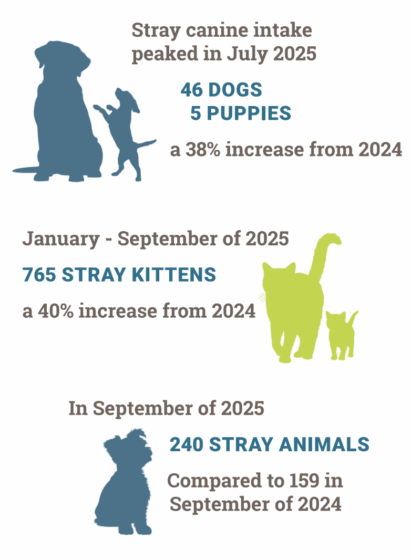
These numbers underscore the importance of a multi-faceted approach to strays in our communities, with a variety of partnerships central to the health and wellness of the pet population.
We do everything in our power to keep pets with their people, but sometimes reuniting stray animals with an owner isn’t possible. In those cases, we create pathways for animals to find happiness in new homes.
Every stray that enters our care receives veterinary and behavioral support upon arrival. After a brief holding period where we investigate any ownership history, we create an individualized adoption plan for that animal, taking into account assessed behavior, medical history, and personality.
Our Oakland and Dublin shelters support stray intake for multiple municipalities.
In addition to our ongoing contract with the City of San Leandro, in 2025 we established a new partnership with the City of Livermore Police Department to help stray, injured, and surrendered animals from Livermore. Seeing an increased need in Oakland, at the same time, we began taking in more stray animals from the Oakland community, ensuring we are caring for as many animals as possible from across the East Bay.
Through our ongoing partnerships and the expansion of staff and services in Dublin and Oakland, we’re helping more communities and meeting the needs of an increased pet population at our shelters. Our goal is to find more animals loving homes, and to decrease the number of animals living without a home or basic care.