
Thankful for Jacque: Where Healing Begins at Home
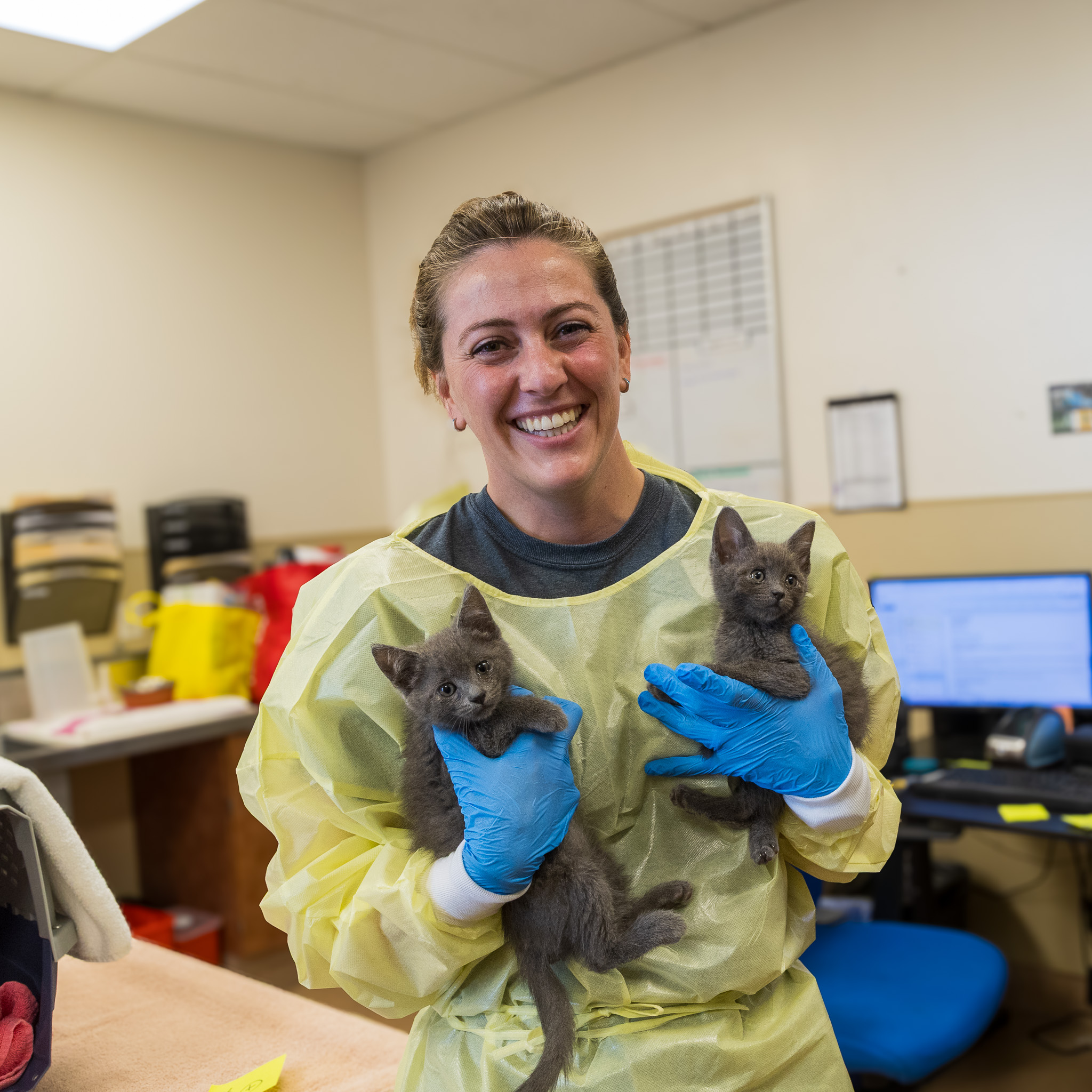
Not every kitten who comes to East Bay SPCA is ready for the adoption floor. Some arrive too sick or too small and need medication, monitoring, and a quiet place to heal.
For many of those kittens, that place is Jacque’s home. She has volunteered with East Bay SPCA since 2019, and today she fosters kittens with some of the most serious medical needs in our care, from upper respiratory infections to panleukopenia.
“There are a few things that gross me out or scare me, so medical cases naturally become my thing,” she says.
Fosters like Jacque are an essential part of how we care for animals. A foster home gives a recovering kitten the close, one-on-one attention that’s hard to give in a busy shelter, a chance to grow into their personality, and a smoother path to adoption. Every animal in foster care also opens space at the shelter for another who needs us.
This season of thanks, we sat down with Jacque to talk about how medical cases became her specialty, what a day of foster care looks like, and why she keeps saying yes to the toughest cases.
You’ve been with East Bay SPCA since 2019. How did you find your way to fostering, and how did medical cases become your specialty?
“I started volunteering with East Bay SPCA in 2019 to help the animals in the shelter and spend time with dogs, since I couldn’t have a dog of my own at the time. I’d fostered before, and eventually I started again because I missed having small kittens in our house. It’s really fun to watch them grow and develop into their own personalities as you care for them. Many people in my family are in the medical field, for people or animals, so I always found medical cases interesting and very rewarding. I started small with a few upper respiratory infection kittens and worked my way up to injuries, calicivirus, and eventually panleukopenia virus kittens (by accident at first). It hasn’t always been easy, but I know I’m making a difference by helping these kittens, and they have all found wonderful homes, which keeps me motivated to take on more of these difficult medical cases.”
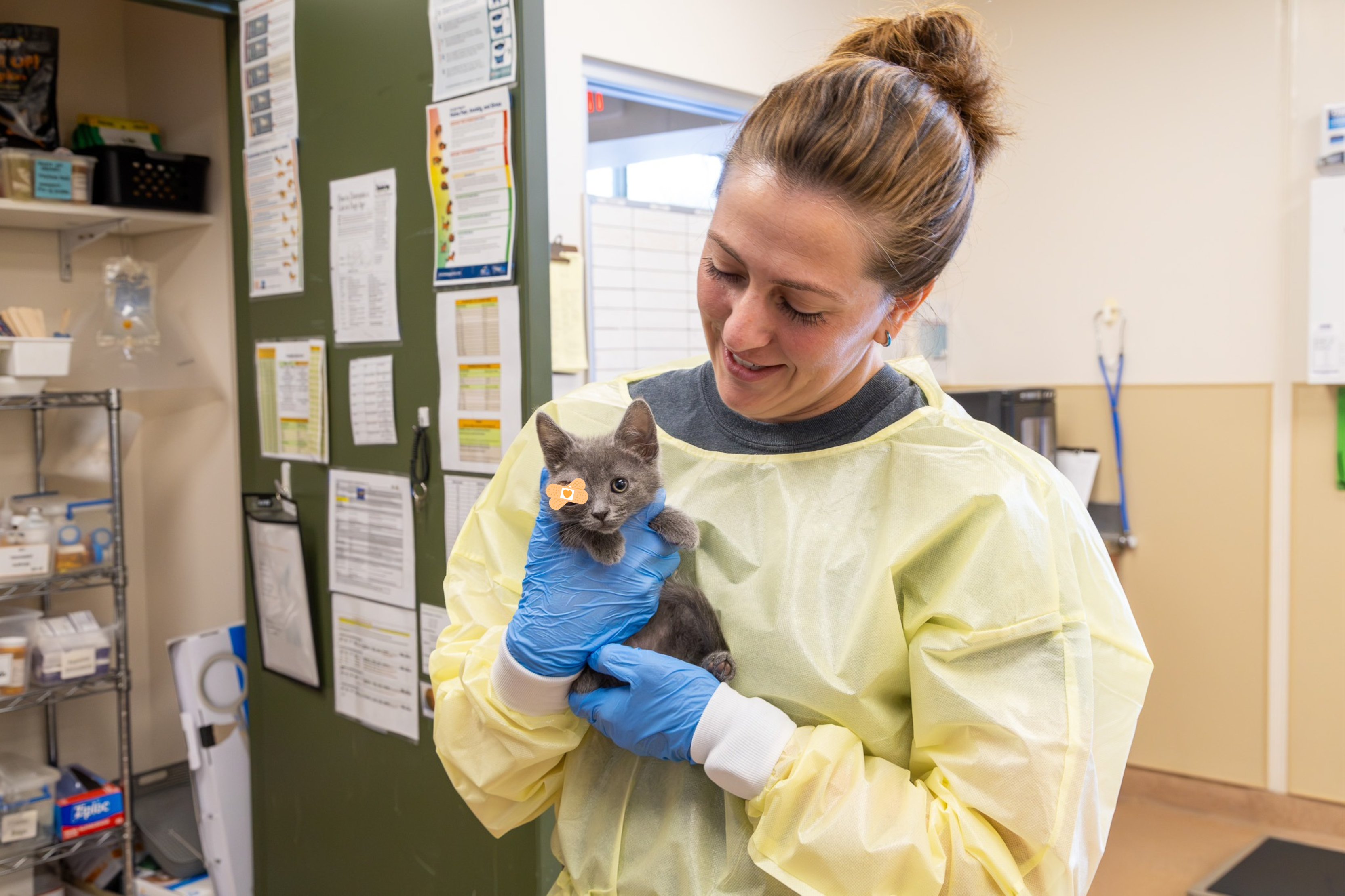
What does a typical day look like when you’re caring for a medical foster?
“Each morning starts with feeding, giving medication, and cleaning up the kitten space. Daily medication can be as simple as oral antibiotics or eye ointment, or as complicated as several medications, giving fluids, taking temperatures, and weighing kittens. During each feeding, I check whether every kitten is active and alert, eating well, and improving. In the evening, I repeat it all. I send the Shelter Medicine team an update every two to three days and reach out right away if something urgent comes up. At vet visits, I help by sharing detailed updates, weighing the kittens, and holding them during treatment.”
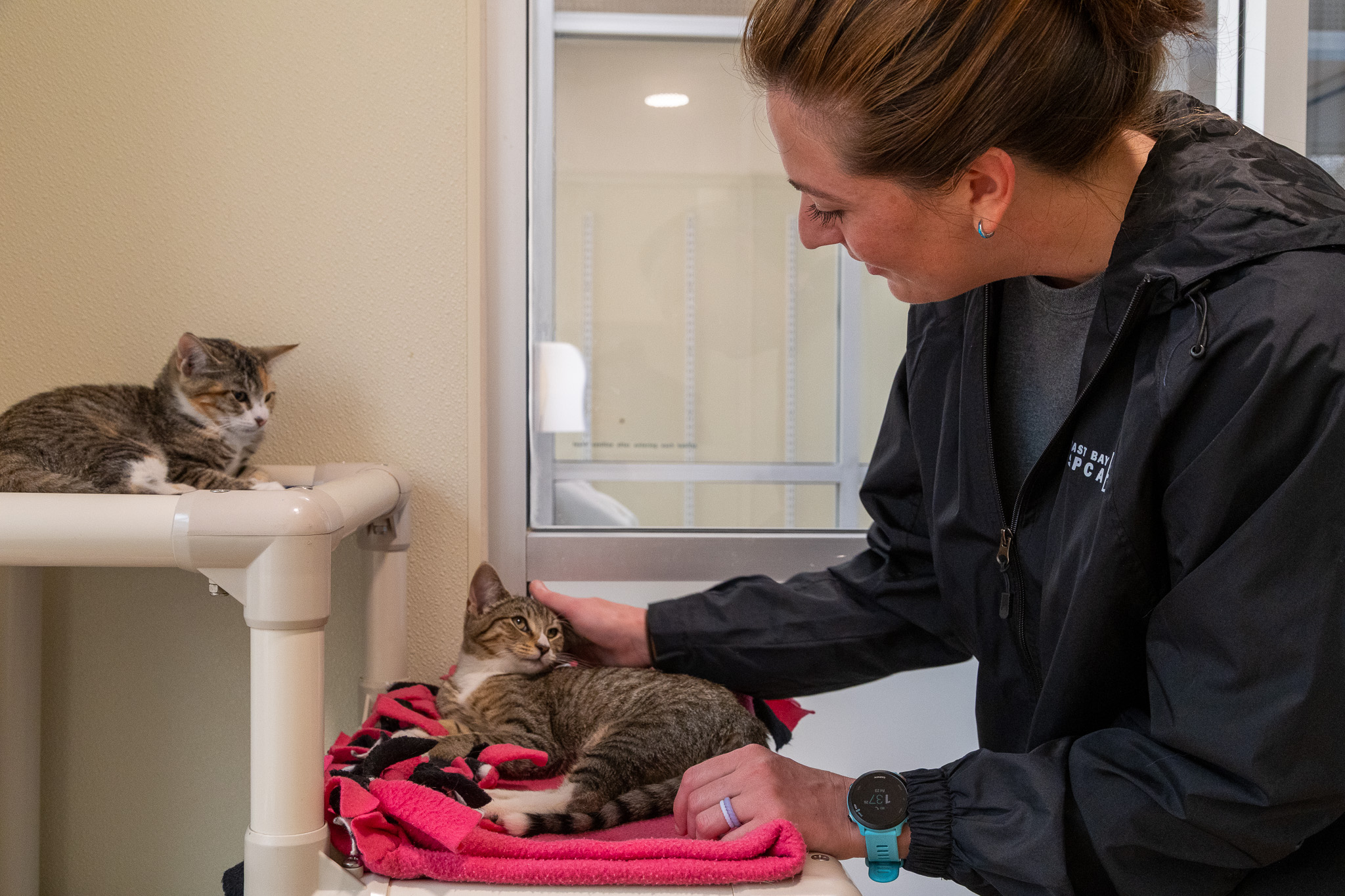
Is there a kitten whose story stayed with you?
“My first panleukopenia kittens stand out most vividly. It was the first time I had cared for kittens that sick, and the virus has a high mortality rate, so it was very nerve-racking. It was a litter of six, and they all ended up with panleuk. The smallest, Evelyn, was the sickest. She needed sub-Q fluids twice a day, daily medications for two weeks, and lots of love and cuddles. The hardest part was that she just wanted to snuggle, but panleuk is very contagious, so we had to keep her quarantined. She was eventually adopted with one of her brothers by a friend of mine, and they are still pampered to this day.”
What would you tell someone who’s thinking about fostering, especially medical cases?
“Fostering can be difficult, but it’s an incredibly rewarding experience and worth it if you have the time and space to take animals in temporarily. If you’re looking to help with medical cases, I suggest starting small, with upper respiratory infections or underweight animals, to get more comfortable. You gain valuable experience with each animal you foster, medical or not, and it gets less stressful over time. The East Bay SPCA Shelter Medicine team is also incredible and will help you as questions or concerns come up. My second piece of advice is that it’s OK to set boundaries and take breaks from fostering when you need to. Even after years of fostering, there are certain medical cases I won’t take on, and I’ll take weeks off between litters to reset and recharge so I can be at my best for the next set of kittens.”
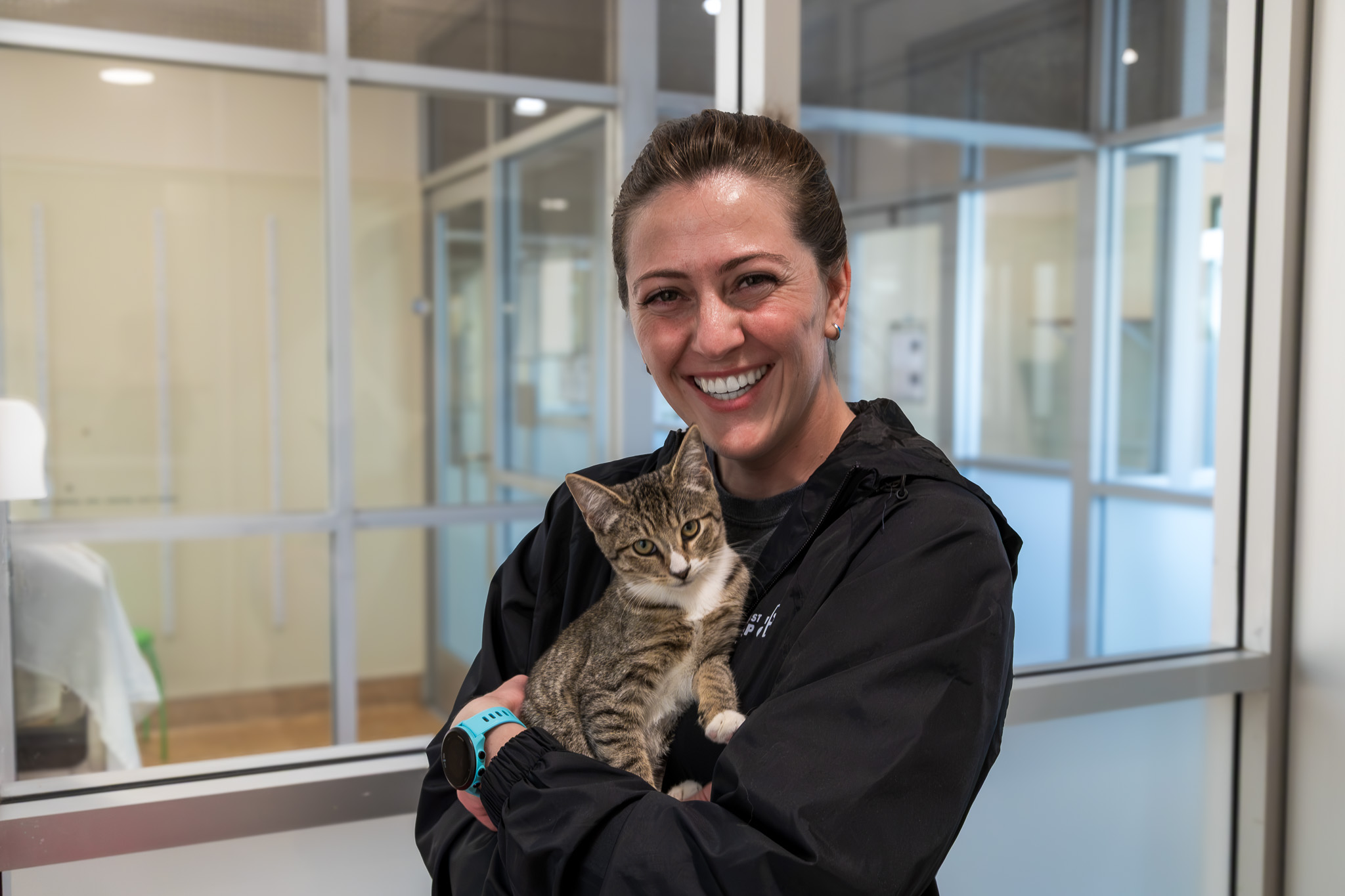
After all these years, what keeps you fostering?
“I keep fostering because I love animals and am proud to give the sickest, hissiest, and pickiest eaters a chance at a happy ending. I really enjoy seeing the transformation these kittens go through and knowing that I helped them get healthy so they can find loving homes.”
Behind every kitten who leaves Jacque’s care healthy and ready for a family is a foster who said yes when the case was hardest. Fostering is how so many animals in our care get the time and attention they need to heal, and Jacque shows what’s possible when someone opens their home.
Thank you, Jacque, for every dose of medication, every evening check-in, and every kitten you’ve helped heal. We’re so grateful for you.
Inspired by Jacque? Explore fostering and other ways to help the animals in our care.
Find Ways to Help