Behind Every Recovery: Celebrating Liz for National Veterinary Technician Week
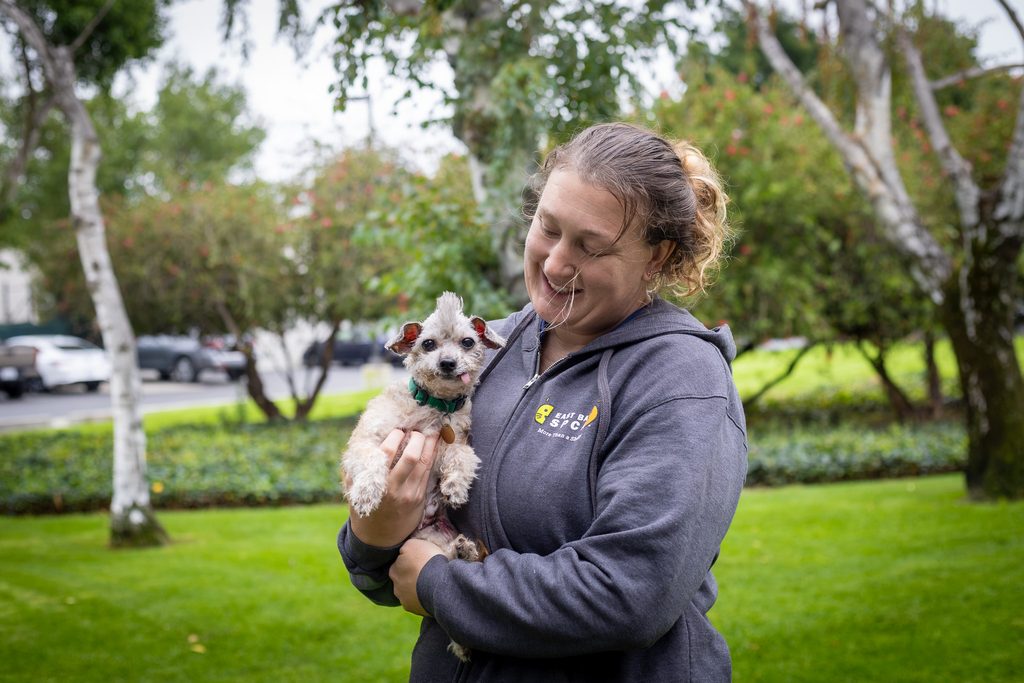
Liz, our Shelter Medicine RVT Lead, has been caring for animals at East Bay SPCA since 2014, but her journey started in the barn. Growing up with horses, she learned early what it means to be responsible for another living being. At 14, a magazine article about a veterinarian who had attended UC Davis turned that early spark into a dream.
“From that point on, becoming a veterinarian became a dream of mine,” she recalls.
Liz joined East Bay SPCA as a veterinary assistant at our Theodore B. Travers Family Veterinary Clinic, then moved into shelter medicine while earning her license as a Registered Veterinary Technician. Along the way, she found a team that invested in her growth, and today she pays it forward by training the team members coming up behind her.
In honor of National Veterinary Technician Week, we sat down with Liz to talk about her journey and the care that happens behind the scenes.
How is shelter medicine different from working in a private practice?
“In shelter medicine, the medical support team is essentially the advocate for hundreds of animals, rather than a handful of patients that pet parents bring into a clinic each day. Owned animals have people at home who continue their care. Here, we’re responsible for identifying what an animal needs and setting them up for the best possible outcome.
It demands a large emotional capacity and the ability to ground yourself. It also requires good detective and observational skills. Stray and sheltered animals can’t tell us what’s wrong or what happened to them, so we have to practice medicine based on limited history.”
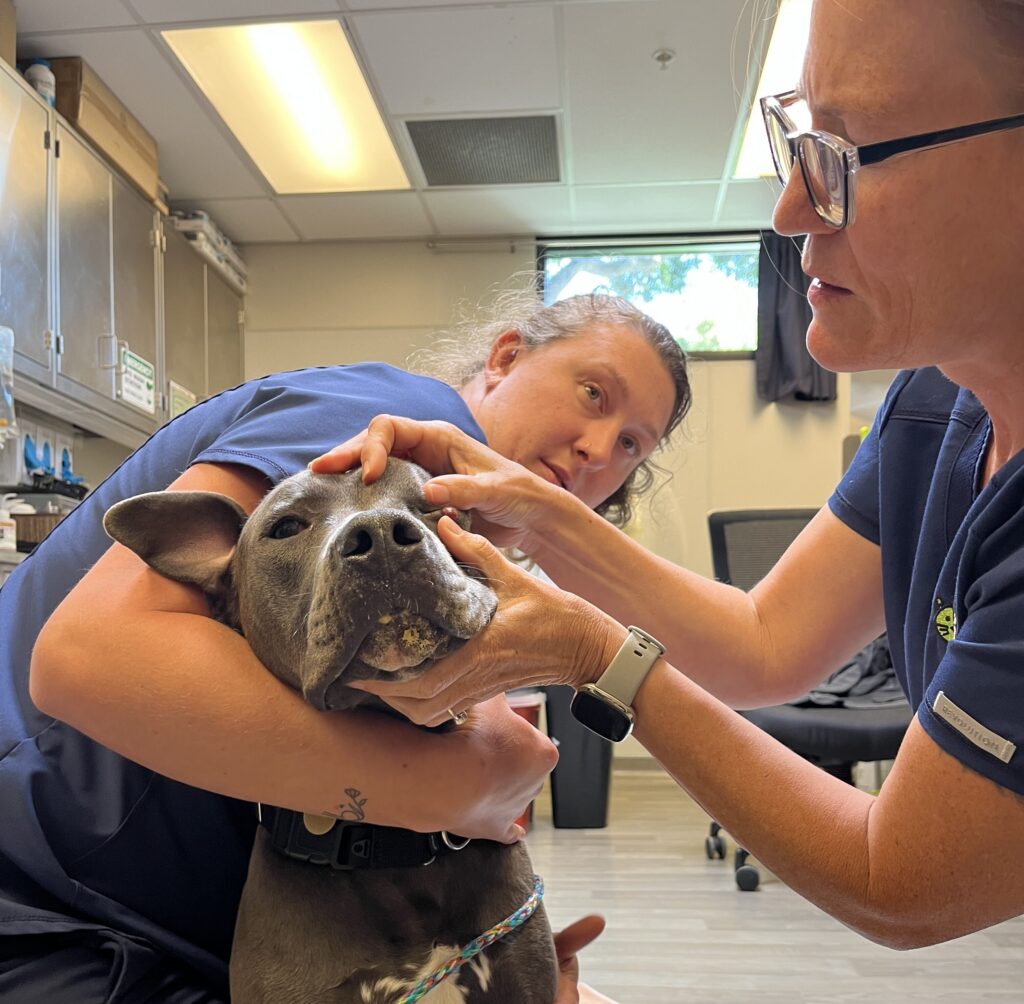
Dr. Josie with Liz and a shelter dog
Is there one animal whose recovery has stayed with you?
“One dog who has really stayed with me is a large Mastiff named Robocop, or Robo for short. He came to us with a significant limp and entropion, where his eyelids were rolling inward and irritating his eyes. Large dogs can sometimes have a harder time finding adopters, so it was meaningful to see our team take a chance on Robo and invest in the medical care he needed, including TPLO surgery for his CCL tear and surgery to repair his entropion.
After his surgery, I laser-treated his knee twice a week for several weeks. It was incredibly rewarding to watch him heal and eventually walk comfortably on his ‘bionic’ knee. Robo was adopted by his foster family, and seeing him go from an animal with significant medical needs to a happy dog in a permanent home is one of the things that makes shelter medicine so meaningful to me.”
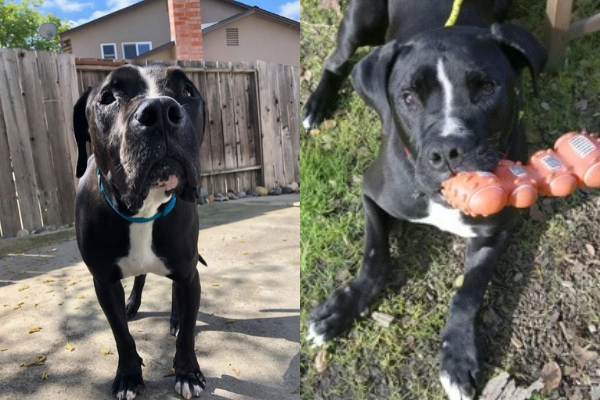
Robo, adopted August 2020
Robo’s recovery took two surgeries, weeks of patient treatment, and a team willing to commit to the long road with him. It’s the kind of care that happens quietly, every day, behind the scenes at East Bay SPCA.
And just as our team invests in animals like Robo, East Bay SPCA invests in the people caring for them. Liz didn’t just build a career here. She grew alongside an organization that made room for her to grow.
How has your role grown, and what are you most looking forward to as a Shelter Medicine RVT Lead?
“Once Dr. Josie joined the team as our full-time Shelter Veterinarian, my skills were able to grow substantially because we had more opportunities to participate in surgery and manage more involved medical cases. I’ve learned so much over the years, and I’ve also had the opportunity to pass that knowledge along by training team members who are newer to the field.
As a Shelter Medicine RVT Lead, I’m really looking forward to building a strong, skilled team of people who are excited to come to work and who share the same compassion for animals and interest in medicine. I want to help create an environment where people feel supported in developing their skills while maintaining the compassion that brought us into this field in the first place.”
That growth shows up in the care animals receive every day, much of it from the people the public rarely sees.
Vet techs often work behind the scenes. What do you wish more people understood about what they do?
“Veterinary technicians are essentially the nurses of veterinary medicine. A lot of what we do happens behind the scenes, but we’re often the people spending the most time with the patient. We monitor them, administer medications and treatments, assist with procedures and surgery, and communicate with the veterinarian about what we’re seeing. We’re there for the patient from beginning to end.”
After 12 years in this work, Liz knows both its weight and its rewards, and she’s honest about both.
What advice would you give someone considering a career as a vet tech, especially in shelter medicine?
“Develop a strong self-care routine. Compassion fatigue and burnout are very real in veterinary medicine and animal welfare, and this work can consume you if you don’t learn how to take care of yourself, too.
And show up ready to hustle! Shelter medicine is fast-paced, unpredictable, and always keeps you on your toes. But there is nothing quite like seeing an animal with significant medical needs pull through, get healthy, and ultimately make it to adoption. If you love animals, enjoy learning, and want to make a difference, it can be an incredibly rewarding career.”
Growing Together
Liz is quick to share the credit with her team.
“I’m really proud of the people I get to work with,” she said. “We each have different strengths, but our shared compassion for the animals and commitment to their care is what makes this team special.”
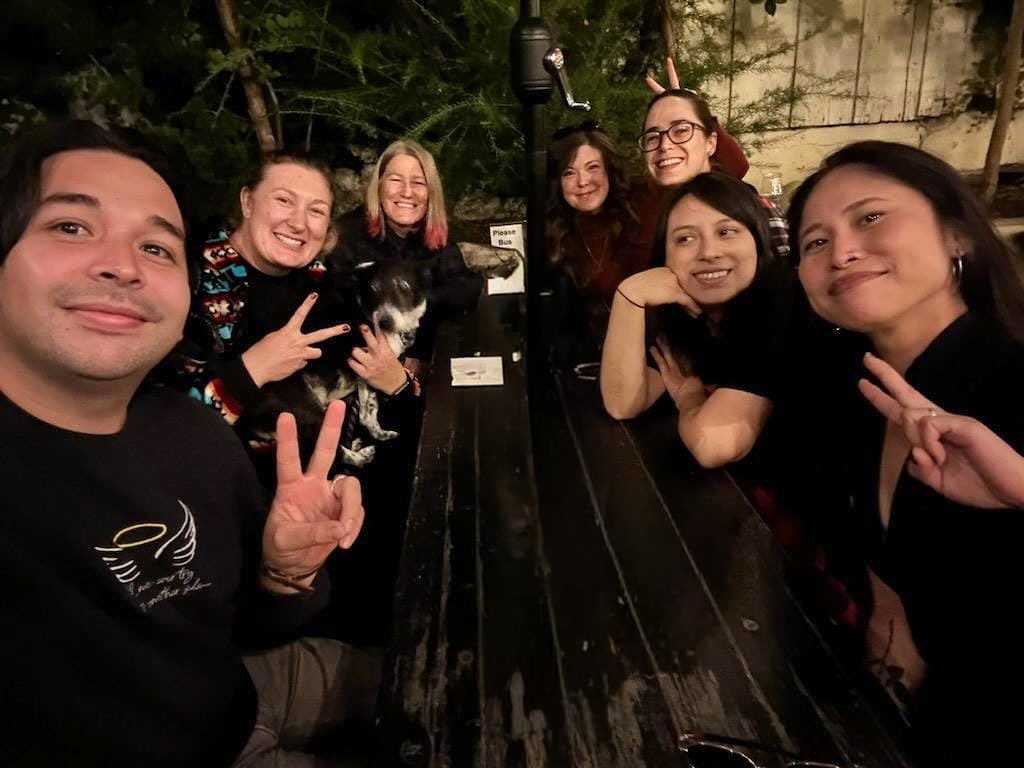
Shelter Medicine Team, East Bay SPCA
That same spirit runs through every veterinary technician at East Bay SPCA. Across Shelter Medicine and Medical Services, our vet techs care for animals waiting for homes and the pets our community brings through our doors. They’re pursuing licensing credentials, stepping into new roles, and training the team members coming up behind them. As Liz puts it, “Staying curious and continuing to learn makes us better at what we do.”
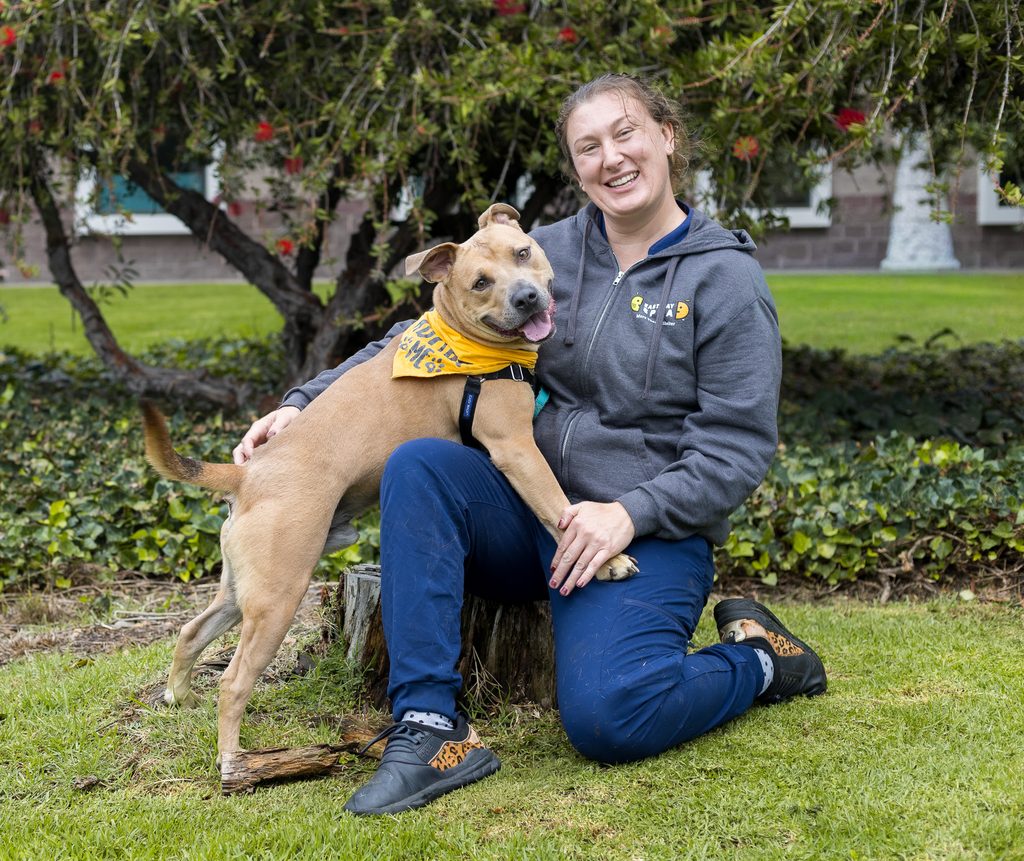
Liz with Rascal, now adopted
This National Veterinary Technician Week, we’re celebrating Liz and all the compassionate, skilled veterinary technicians and veterinary professionals who make stories like Robo’s possible. Thank you for the lifesaving care you give every day and for making East Bay SPCA More Than a Shelter.
Interested in a career in veterinary medicine? We have open positions, and we’d love for you to grow with us. Explore opportunities at eastbayspca.org/careers.